

Understanding Pet Stress at the Vets
Coming into the vet clinic can be a pretty scary experience for many pets. For most pets, this means waiting in a reception area, being stared at by unfamiliar animals and people, where there will be lots of unusual smells and sounds.
Some pets will already have learned that veterinary examinations involve unfamiliar restraint and handling procedures, as well as uncomfortable things like injections, kennel cough vaccines, and temperature checks.
Reading Your Pet’s Body Language (FAS Awareness)
To help improve your pet’s experience, it’s important to be aware of what their body language is trying to communicate about how they are feeling in the moment. This way, you can better understand what they can and can’t cope with, and advocate for them when they are showing signs of fear, anxiety, or stress (FAS).
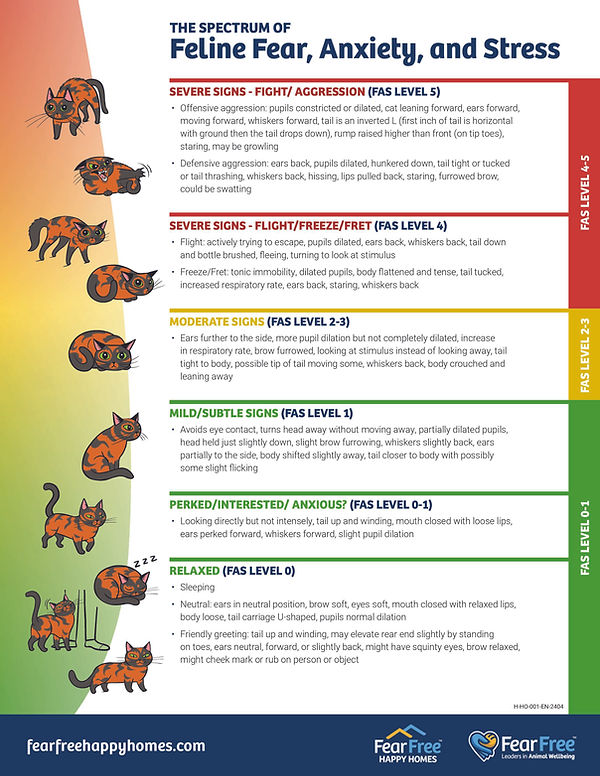
Fear Free® Pets (Fear Free, LLC, 2024) have created body language FAS scales for dogs and cats, using a traffic light grading system to show different types of body language and what they might mean for how your pet is feeling. These are useful not only at the vets, but also around the home or when out and about.

The Traffic Light System: Recognising Stress Levels
For example, if your pet is in the green zone, they are comfortable and coping with whatever is happening at that moment. However, be aware of signs that they are moving out of their comfort zone and into the yellow or red zones.
When they enter the yellow zone, take a moment to assess what is causing the discomfort and see if you can help get them back into the green zone. This could be by taking a short break, gently reassuring them, or offering food rewards to make the experience more positive.
If they move into the red zone, they need a break, and it may be that they also require additional support, such as coming back on a different day or using anti-anxiety medications to help them relax enough for whatever needs to be done. You can discuss this with your vet to come up with an appropriate plan for what is best for your pet.


Why Stress Can Start Before You Arrive
Your pet’s stress levels may start building up before you even get to the vet practice, meaning that by the time they reach the examination room, they may already be in the yellow or red zones.
So, think about your journey to the practice and what you can do to minimise your pet’s FAS from building up.
Example Scenario: A Stressful Vet Visit for a Cat
Let’s take a look at an indoor cat who needs to come in for his annual booster vaccinations and health check.
-
The cat carrier is brought out of storage. The last time the cat was in the carrier was when he was brought in for surgery. He doesn’t like the carrier and gets upset when he is put in and the door is closed.
-
The journey to the practice involves walking to the bus stop, sitting on a bus with lots of noisy strangers around, and then walking to the practice. The cat is frightened by the movement of the carrier during the walk and by being surrounded by unfamiliar people.
-
In the waiting area of the vets, his carrier is placed on the floor, and there is a dog opposite barking and staring at him. He is now terrified and trying to hide at the back of the carrier.
-
He gets into the examination room with the vet. He needs to be pulled out of his box because he refuses to come out himself. The vet must then examine him, listen to his heart, and give him his injections. He is now hissing at the vet and trying to escape handling.

How to Reduce Stress: Practical Tips for Pet Owners
From this scenario, we can try to anticipate the areas that are going to cause the cat discomfort and consider what we can do to prevent or minimise this.
Carrier Training for Cats
-
Carrier train your cat, preferably from when they are kittens. Get them used to going in and out of the carrier by making it a nice, cosy space. Offer treats for going in, and gradually start to close the door for short periods while they are eating and relaxed.
-
Either do this regularly or leave the carrier out as one of their hiding spaces at home.
-
Once they are comfortable, start picking up the carrier and putting it down again, gradually building up to walking around with it as the cat gets used to it.
Planning a Calm Journey to the Vet
-
Consider the journey from your home to the practice. For example, can you drive or take a taxi instead?
-
If not, can you cover your cat’s carrier with a Feliway-sprayed blanket or towel to reduce the impact of busy streets and unfamiliar surroundings on public transport?
Reducing Stress in the Waiting Room
-
When in the waiting room at the vets, place your cat’s carrier on an elevated surface (e.g. a chair or your knee) and keep it away from other animals.
-
Don’t allow dogs to approach your pet’s carrier and avoid placing two cat carriers facing each other, as cats do not like being stared at.
-
Keep the carrier covered with a Feliway-sprayed blanket or towel. If you don’t have one, ask the reception team if they can provide a cover.
Making the Consultation Room Less Stressful
-
When you get into the examination room, take time to allow your cat to walk out by themselves if possible, as this is less frightening.
-
Consider the type of carrier you have—a top-opening carrier is preferable to one that only opens at the front.
-
This allows the vet to remove the lid and examine your pet without pulling them out.
When to Consider Additional Support
If your pet still struggles with fear, anxiety, or stress despite your efforts, discuss the possibility of anti-anxiety medications for future visits with your vet.